The "Visualization Ceiling": Why PowerBI is No Longer the Gold Standard for High-Growth Finance
PowerBI helped teams see data, but growing finance teams need more than visuals. This blog explores why static BI tools fail and how Kudwa analyzes performance

Elevating from Static Reporting to Real-Time Strategic Action in the GCC.
At-a-Glance Executive Summary
- Static Limits. General BI tools visualize data but often fail to provide deep financial analysis.
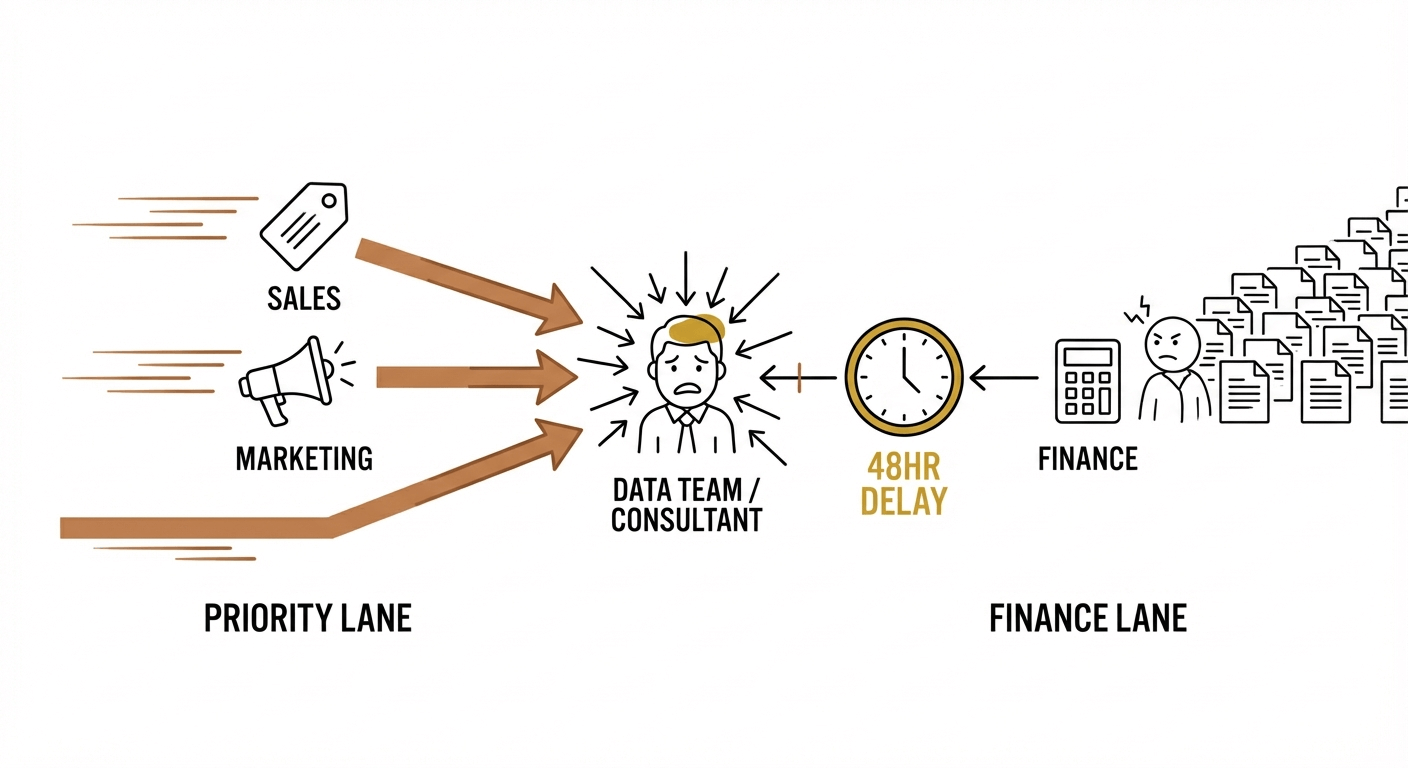
- Resource Friction. Finance teams frequently wait behind Sales and Marketing for technical support.
- The "Gatekeeper" Gap. Dependence on external consultants creates a multi-day lag for simple updates.
- Consolidation Strain. Multi-entity reporting in the GCC remains manual despite having expensive dashboards.
- Costly Iterations. Every new KPI or report adjustment results in additional billable hours or internal burnout.
- Logic Absence. General tools lack native financial intelligence, requiring manual "workarounds" in Excel.
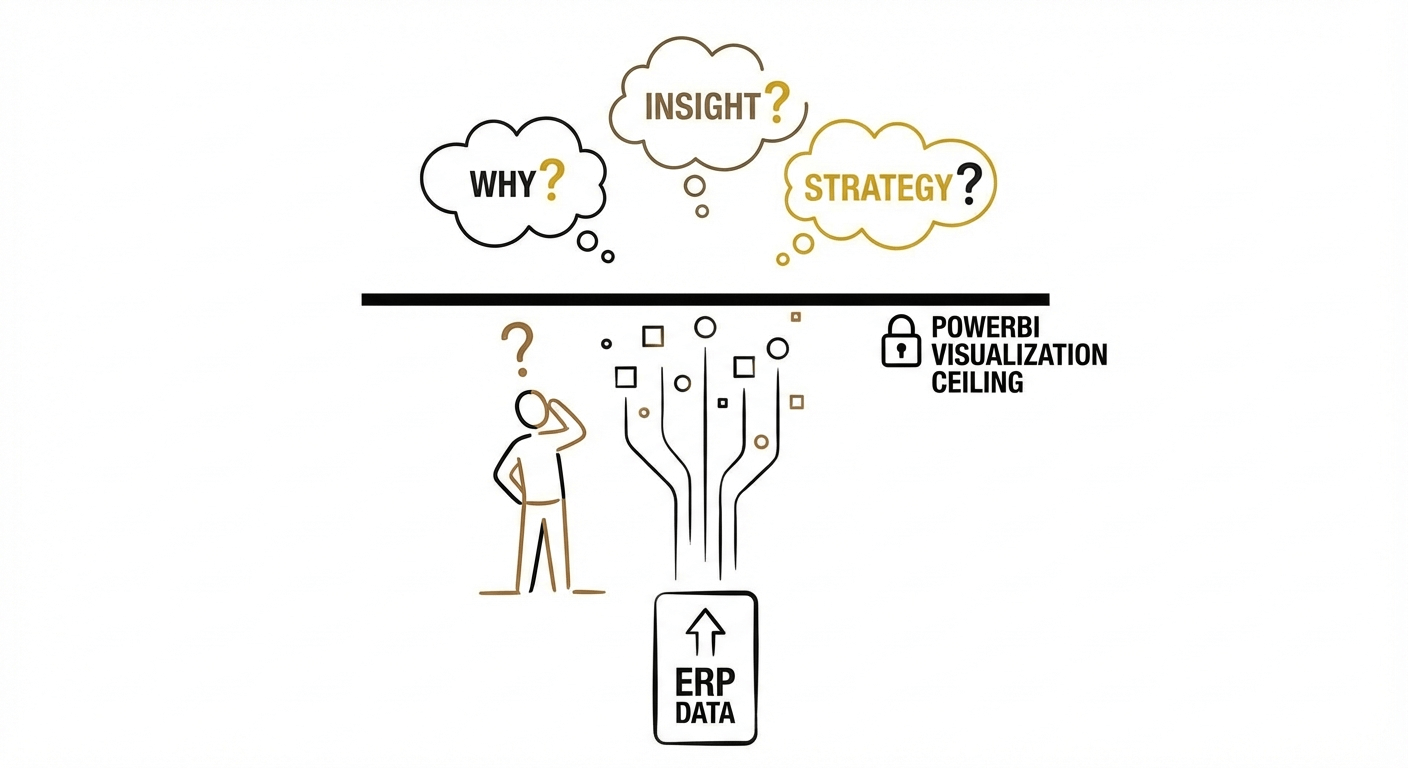
- The "Why" Void. Dashboards show that a metric changed but cannot explain the underlying cause.
The Narrative Opening: The 48-Hour Information Lag
The GCC business landscape moves at a pace that traditional reporting can no longer match. Consider a CFO overseeing a retail group with entities in Dubai, Riyadh, and Abu Dhabi. The CEO calls on a Tuesday morning with a direct question: "Why did our margins in Saudi drop while our top-line revenue increased by 15%?"
In a company relying on PowerBI, the CFO likely knows the answer is somewhere in the system. However, getting to it is the problem. They must reach out to the one internal data analyst or an external agency. They are then told that the "Sales Dashboard" is currently the priority.
The CFO is forced to say: "Give me 48 hours to model that."
This scenario is common across the region. The gap between seeing the data and explaining it is where finance-native AI analysis sits it's a different capability to visualisation, not a better version of it. While PowerBI revolutionized how we see data, it has reached a ceiling. It was designed to show "what" happened, but for a Finance Manager in 2026, knowing "what" is only half the job. You are expected to be a strategic partner, yet you are often trapped in the role of a data aggregator.
1. The Finance Priority Paradox
In most organizations, PowerBI is a shared resource. Because Sales and Marketing are seen as the primary "revenue drivers," their requests for lead-gen and conversion dashboards often jump to the front of the queue.
Finance requests, such as complex cash flow forecasting or intercompany eliminations, are viewed as back-office requirements. Intercompany eliminations in particular aren't a BI problem — they're a consolidation problem that needs to be solved before the data reaches any dashboard. This leaves the Finance Manager at the mercy of a technical gatekeeper who may not understand the urgency of a board-level query.
2. The Consultant Dependency Trap
PowerBI is powerful, but it is not "plug-and-play" for complex finance. It requires specialized DAX coding and data modeling. When a Finance Manager needs a new KPI or a change in the way EBITDA is calculated, they are often forced to call an external consultant.
This creates a cycle of dependency. Every shift in business strategy results in a new invoice and a week-long wait. For a $1mn+ revenue company, this lack of agility is more than just an annoyance. It is a business risk that prevents rapid pivoting in a volatile market.
3. The Multi-Entity Consolidation Crisis
For GCC-based groups, the complexity of managing multiple entities is the norm. Whether it is dealing with different VAT jurisdictions or performing intercompany eliminations, the logic required is strictly financial.
General BI tools do not "know" how to consolidate a group of companies automatically. This means Finance Managers often end up exporting data out of their expensive BI tools and back into Excel to perform the actual consolidation. If the software isn't doing the heavy lifting, it isn't solving the core problem.
4. Visualization vs. Intelligent Analysis
There is a significant difference between a "Report" and an "Analysis." A report tells you that your burn rate has increased. An analysis tells you that the increase was driven by a specific vendor's price hike in a secondary entity.
PowerBI is an excellent reporting tool, but it lacks the narrative layer. Finance Managers are moving toward solutions that provide the "Why" behind the numbers without requiring them to manually dig through the underlying transactions.
The Solution: Moving Toward Finance-First Intelligence
The evolution of the industry is shifting away from generic visualization and toward specialized AI Finance Agents. The goal is no longer to just "see" the data, but to "interact" with it. This is where the transition to a platform like Kudwa becomes the inevitable next step for growth-focused leaders.
- Zero-Gatekeeper Access. You connect your data sources via simple credentials. No "Data Engineering" projects are required to get started.
- Dynamic Flexibility. Finance users can build their own KPIs and reports through an intuitive interface or a simple conversation with an AI.
- Deep Narrative Insight. Instead of just seeing a red bar on a graph, you can ask the system: "What caused the variance in our Opex this month?" and receive a detailed breakdown instantly.
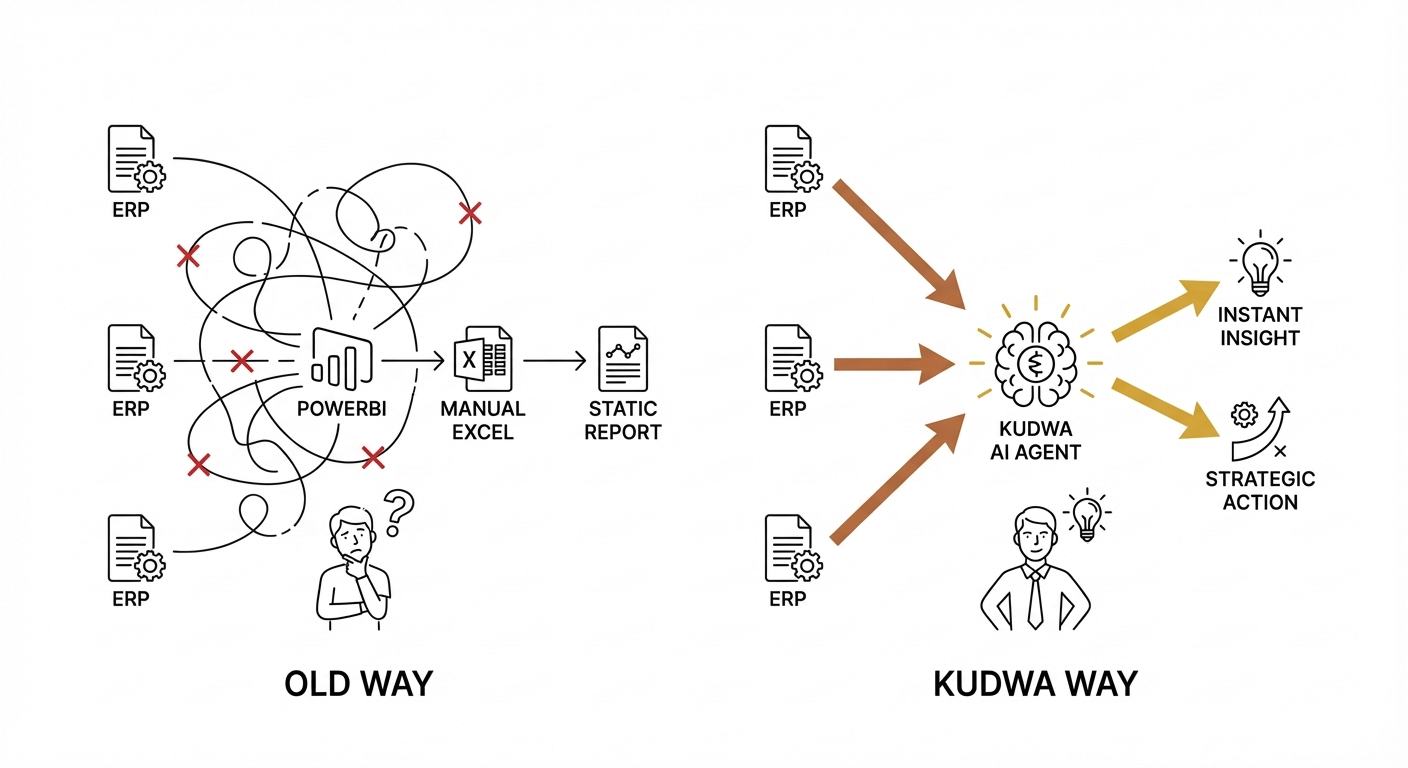
While tools like Excel and PowerBI will always have a place in the tech stack for specific tasks, they are no longer sufficient as the primary engine for a modern Finance Department. The shift toward specialized, AI-driven platforms allows the CFO to stop being a "bean counter" and start being the "Growth Architect."
Your time is too valuable to be spent waiting on a consultant or manually reconciling entities in a spreadsheet. It is time to reclaim your strategic autonomy.
Explore how Kudwa provides the 'Why' behind your GCC financial data.
Would you like to see a comparison of your current reporting time versus an automated workflow?
Request a Brief Strategy Session.
Latest from Kudwa

5 Best AI Finance Tools in the UAE for 2026
Every finance platform now talks about AI. The harder question for UAE finance teams is which tools actually remove work and earn their place in the stack.

Finance Software ROI: How to Judge Your CFO's Next Request
A $30,000 software request looked like overhead. Six months later it cost $200,000 in margin. How to judge finance software ROI before you decline.