KSA E-Invoicing Timeline: ZATCA Fatoora Deadlines and Finance Readiness Checklist
Track the KSA e-invoicing timeline, ZATCA Phase 2 waves, Fatoora integration, and finance readiness checks for Saudi companies.
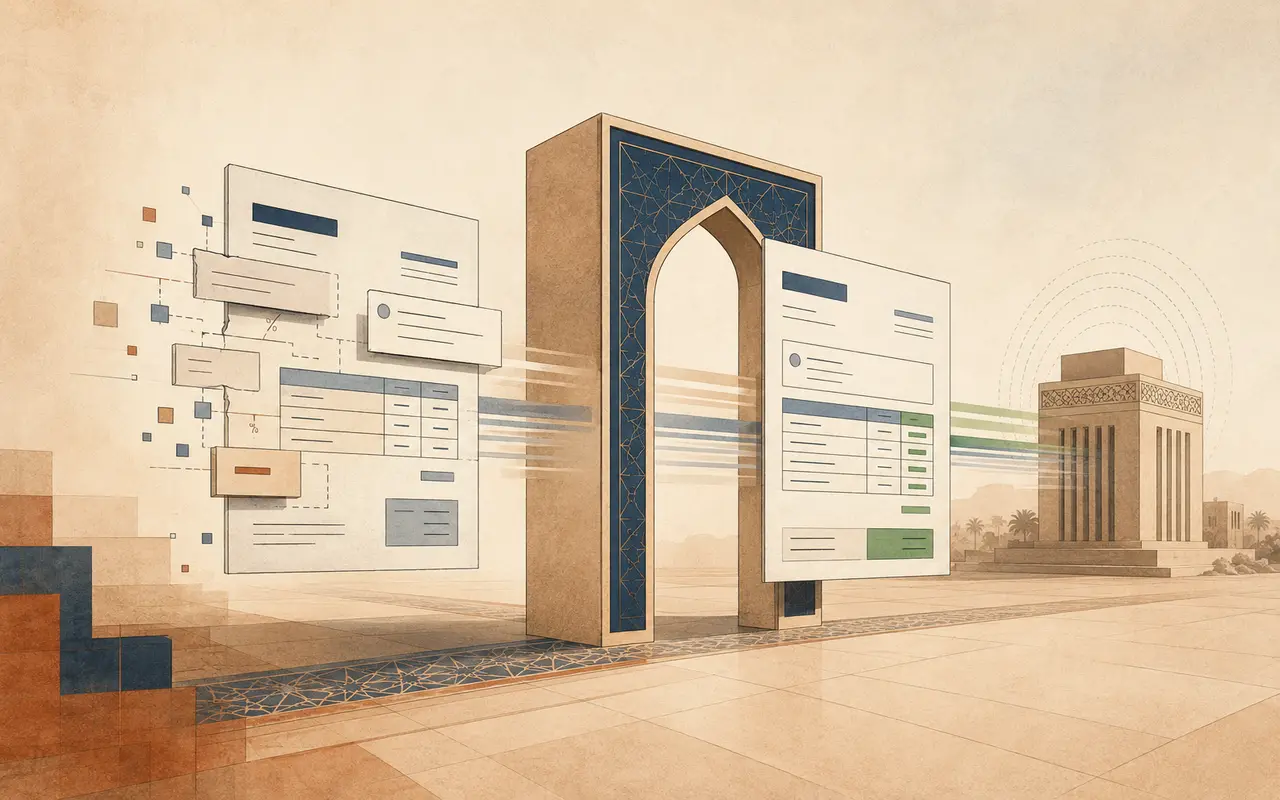
Executive summary
- KSA e-invoicing is already active, not an upcoming mandate finance teams can ignore.
- Phase 1 required invoice generation and storage from 4 December 2021.
- Phase 2 requires integration with ZATCA’s Fatoora platform and is being rolled out in waves.
- Finance should treat e-invoicing as an invoice data, VAT, reporting, and reconciliation issue, not only a tax technology project.
A Saudi finance team receives a ZATCA notice that the company is included in a Phase 2 e-invoicing wave.
The deadline is months away, so it feels manageable. The accounting system already issues invoices. VAT is being filed. Customers are being billed. On the surface, the company is not starting from zero.
But the finance questions are more practical: Are customer VAT numbers complete? Are credit and debit notes handled correctly? Is invoice data structured properly? Is the accounting or ERP system ready to integrate with Fatoora? Can rejected or incomplete invoices be found before they affect VAT, receivables, and reporting?
That is where the KSA e-invoicing timeline matters. It is not only a compliance date. It is a finance data readiness issue.
Phase 1 vs Phase 2
KSA e-invoicing is implemented in two main phases.
Phase 1 is the generation phase. It applies from 4 December 2021. In this phase, taxpayers subject to the e-invoicing regulation must generate and store tax invoices and related notes through compliant electronic solutions. The practical shift was away from handwritten invoices or invoices created through basic text editors or spreadsheet-style tools.
Phase 2 is the integration phase. It applies from 1 January 2023 in waves. In this phase, targeted taxpayers must integrate their e-invoicing solutions with ZATCA’s systems through the Fatoora platform. Phase 2 also introduces additional technical and business requirements, including invoices generated in the required format and additional invoice fields.
The important point for finance is that Phase 2 is not a single date for every company. ZATCA is selecting taxpayer groups in waves and notifying targeted taxpayers before their integration date.
That means finance should not only ask, “What is the national e-invoicing deadline?” The better question is: “Has our company received a ZATCA notice, and are our invoice data, systems, and evidence ready for our wave?”
What Phase 2 changes operationally
Phase 2 changes e-invoicing from a local invoice-generation process into an integrated reporting process.
The company still needs to issue invoices, credit notes, and debit notes. But now the invoicing solution must connect with ZATCA’s platform and meet the required format and field requirements. That creates operational dependencies across finance, accounting, tax, IT, ERP or accounting software, and sometimes external implementation partners.
For finance, the risk is not only technical failure. The risk is that invoice data is incomplete or inconsistent before integration begins.
A customer name may differ across the CRM, accounting system, and tax invoice. VAT numbers may be missing or outdated. Credit notes may not reference the original invoice properly. Product or service descriptions may not be structured consistently. Tax coding may be handled manually. Invoice records may not reconcile cleanly to revenue, receivables, and VAT reporting.
Those issues become harder to fix once e-invoicing is part of the live operating flow.
Finance readiness checklist before the deadline
Before a Phase 2 integration date, finance should review more than the technology setup.
Start with invoice data quality. Customer records, VAT numbers, invoice fields, tax treatment, product or service details, and invoice sequencing should be reviewed before integration becomes urgent.
Then check credit and debit notes. Finance should confirm whether notes are issued consistently, connected to the right original invoice, and reflected correctly in VAT and receivables reporting.
Next, review ERP or accounting system readiness. The system should support the required invoice format, integration workflow, technical requirements, and evidence trail. If an external provider is involved, finance should know who owns testing, issue resolution, and final sign-off.
Finance should also check transaction validation. Rejected, incomplete, duplicate, or inconsistent invoices need a review process. The team should know how issues are flagged, who fixes them, and how corrections flow back into reporting.
Finally, review archiving and evidence. E-invoices, notes, integration confirmations, error logs, and implementation evidence should not sit across personal inboxes or disconnected folders. Finance needs to know where proof lives.
What to track in the KSA compliance calendar
The KSA compliance calendar should include more than a single e-invoicing deadline.
Finance should track whether the company has received a ZATCA wave notice, the integration date, the internal readiness deadline, system testing milestones, data cleanup actions, owner assignments, and evidence location.
The calendar should also link e-invoicing to adjacent finance workflows: VAT filing, revenue reporting, accounts receivable, customer master data, credit notes, collections, and month-end reconciliation.
This matters because e-invoicing data does not stay inside the tax process. It becomes part of how finance explains revenue, billing, receivables, VAT, and cash movement.
Where Kudwa fits
Kudwa is not an e-invoicing system and does not replace ZATCA, Fatoora, the ERP, accounting software, tax advisors, or implementation partners.
Its role is downstream of that process. Kudwa helps finance teams use cleaner invoice, accounting, bank, and operational data for reporting, reconciliation, cash visibility, and analysis.
That becomes useful when e-invoicing improves invoice structure, but finance still needs to connect invoice data to revenue, collections, VAT, entity performance, customer movement, and management reporting. The compliance requirement may start with the invoice, but the finance value appears when that data can be used across reporting workflows.
Practical takeaway
KSA e-invoicing should not be treated as a one-time technical deadline.
Phase 1 made compliant electronic invoice generation and storage mandatory. Phase 2 is moving companies into integration with ZATCA’s Fatoora platform in waves. For finance, the real preparation is making sure invoice data, VAT treatment, customer records, credit notes, system readiness, validation, and evidence are controlled before the integration date arrives.
Use the KSA Compliance Calendar to track ZATCA e-invoicing waves, readiness milestones, owners, evidence, and downstream finance checks in one place.
Latest from Kudwa

Deferred Tax in Multi-Entity Consolidation: The DTA No UAE Entity Return Shows
Every entity return reconciles, yet the group is short a DTA. See where deferred tax in multi entity consolidation hides in eliminations, and how to measure it.

Segment Reporting vs Entity Reporting: Building a Business-Line View That Survives the Close
The analyst who splits the trading entity was out, so distribution vanished from the board pack. Segment reporting vs entity reporting needs a written map.