Reporting Software for Finance Leaders: What to Actually Look For
Reporting software for finance leaders should help explain, trace, and defend numbers, not only format dashboards and board packs.
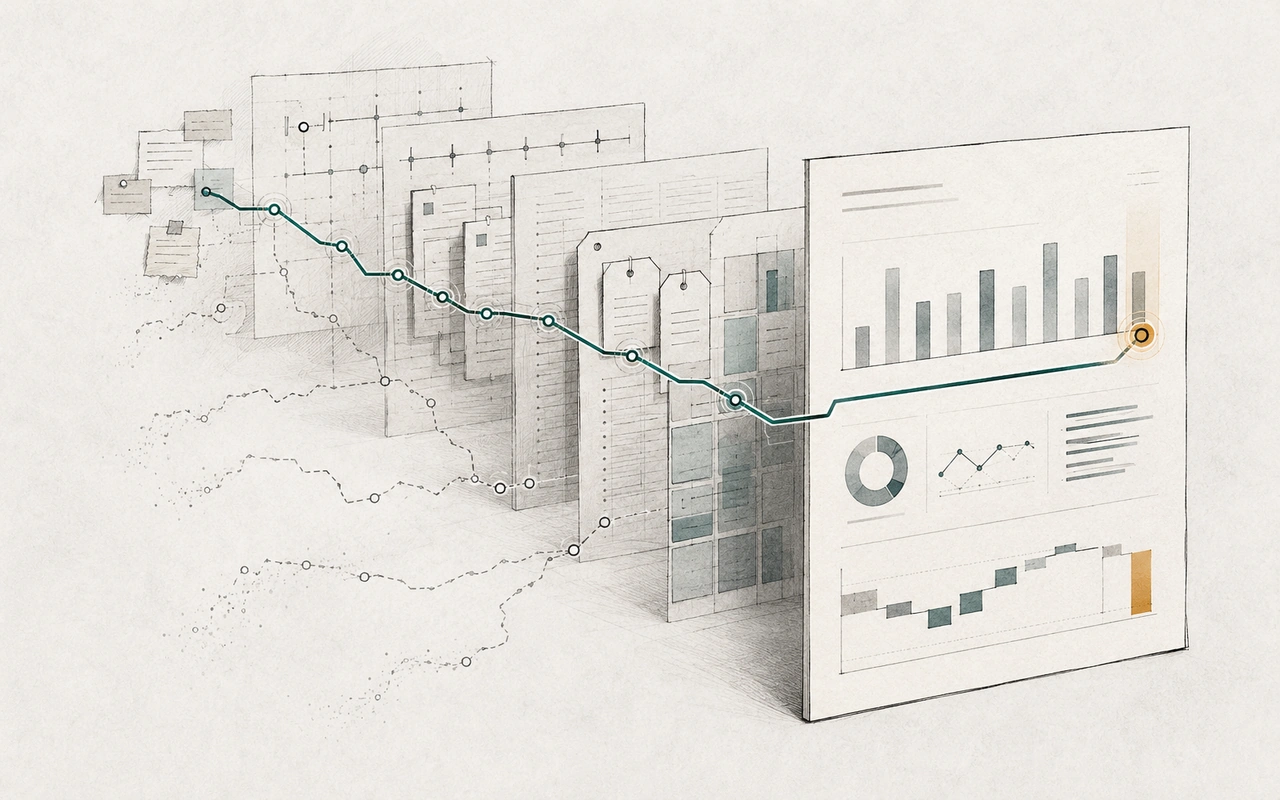
Executive summary
- Good reporting software should make follow-up questions easier to answer, not only make reports cleaner.
- A report is weak if finance cannot trace a variance from summary to department, account, vendor, invoice, or timing driver.
- Dashboards often stop at presentation when the underlying dataset is already summarized before it enters the tool.
- Finance leaders should evaluate reporting software by answerability, traceability, and repeatability.
The board pack shows OPEX up 14% against forecast. The chart is clean. The variance is highlighted. The CFO explains that the increase is mainly in sales and marketing.
Then the follow-up comes: “Is that from hiring, agency spend, software, campaign timing, or one large invoice?”
The answer is not in the report. Finance has to reopen the accounting export, the department budget file, the AP detail, and last month’s commentary to reconstruct the driver. That is the point where reporting software for finance leaders should be judged. Not by whether the report looks finished, but by whether it can support the next question.
Why reporting software for finance leaders should be judged by answerability
Finance reporting is not only the act of presenting numbers. It is the process of explaining what changed, why it changed, whether it matters, and what decision should follow. A tool that improves layout but leaves finance unable to answer follow-up questions has solved the presentation layer, not the reporting problem.
Answerability is the practical test. If revenue is below forecast, can finance see whether the miss came from timing, volume, discounting, churn, or recognition rules? If payroll is above plan, can the report separate new hires, backdated adjustments, bonuses, contractor conversion, and department allocation? If cash is lower than expected, can finance connect the movement to AP timing, collections delay, payroll, tax, or intercompany funding?
The answer does not always need to be instant, but it should not require rebuilding the dataset outside the reporting process. Once finance has to leave the reporting layer for every serious question, the report becomes a polished endpoint rather than a controlled management tool.
Where dashboards stop too early
Many reporting tools receive already-summarized extracts. Finance exports data from the accounting system, cleans it in a spreadsheet, maps accounts to management categories, adds commentary, and then loads the finished output into a reporting or dashboard tool. The final view looks structured, but the logic that makes it usable sits outside the tool.
That creates a specific failure mechanism. The report shows OPEX up 14%, but finance cannot move from total OPEX to department, account, vendor, invoice, and timing driver without leaving the reporting layer. The dashboard can show the movement, but it cannot defend the movement.
At low complexity, this may be acceptable. One finance manager knows which vendor caused the variance and can explain it from memory. As departments, cost centers, entities, budget owners, and recurring board questions increase, memory stops being a reporting control. Finance needs the number and the path behind the number.
This is where lean teams feel the pressure first. The issue is not only workload; it is that every follow-up question creates another manual investigation. That pattern is covered in how lean finance teams can run serious reporting without adding headcount: the finance team needs a reporting model that reduces repeated reconstruction, not only a cleaner output format.
What finance leaders should check before choosing reporting software
Finance leaders should evaluate reporting software from the boardroom backward. Start with the questions that usually follow the report, then test whether the software can answer them without forcing finance to rebuild the working file.
The first check is source traceability. A reported number should connect back to the source data that created it, whether that source is the ledger, bank feed, payroll system, CRM, billing tool, or operational file. Without traceability, finance can present totals but cannot defend them when challenged.
The second check is reporting logic. Finance needs controlled mappings from accounts to management categories, departments to reporting lines, entities to group views, and transactions to commentary. If this logic lives in one analyst’s spreadsheet, the reporting process is still fragile even if the final dashboard looks stable.
The third check is variance explanation. Reporting software should help finance connect actuals, forecast, budget, and driver commentary. A variance is only useful when the team can explain whether it came from timing, price, volume, mix, one-off items, or classification. Otherwise, finance produces movement without cause.
The fourth check is repeatability. If the same report is rebuilt every month through exports, copy-paste steps, and manual remapping, the tool is not controlling the process. It is receiving the result after finance has already done the hard work elsewhere.
Reporting software evaluation scorecard
Use this scorecard before choosing or replacing reporting software:
The purpose is not to demand every feature from one tool. It is to separate visual reporting from finance reporting control. A dashboard that cannot trace, explain, or repeat the reporting logic may still be useful, but it should not be mistaken for the finance team’s main reporting layer.
Where a post-accounting layer fits
A post-accounting layer becomes relevant when finance needs reports that stay connected to the data behind them. The accounting system remains the system of record for transactions. The ERP may manage broader workflows. BI may help visualize outputs. But finance still needs a controlled layer where accounting, bank, payroll, CRM, operational, and forecast data can be connected for management reporting.
This is where Kudwa can help: not by replacing the accounting system or ERP, but by connecting finance data into a reporting view where teams can move from summary figures to source context, variance drivers, and management commentary. That is especially useful when reporting depends on data that does not live neatly inside one system.
A good reporting process should also connect to data in one place. If finance has to reconcile bank balances, payroll updates, AP timing, CRM movement, and ledger actuals before each report is built, the reporting issue starts before the report. The software should reduce that gap, not simply format the final output.
Practical takeaway
Reporting software should be evaluated by what happens after the first question. A clean board pack is useful, but it is not enough if the CFO has to reopen five files to explain one variance. The real test is whether finance can move from the reported number to the source, driver, owner, and decision implication without rebuilding the analysis offline.
Finance leaders should ask vendors to demonstrate a real follow-up question, not only a finished dashboard. Take one material variance and test the path from total to department, account, vendor, invoice, timing, and commentary. If that path breaks, the tool may improve presentation, but it will not fully improve reporting control.
If your reports look finished but still require offline work after every serious follow-up question, the reporting layer is stopping too early. See how Kudwa supports finance analysis and reporting across your existing finance data.
Latest from Kudwa

How to Cut Costs Without Hurting Growth
Cutting the spend you can see is easy. Here is how to cut costs without hurting growth: find which dollars produce revenue before you remove them.

AI in FP&A: Which Parts of the Cycle It Can Actually Run
AI in FP&A can name the driver behind a margin miss before your team opens the file. What it runs today, and where approval still sits.