Approval Workflow for Finance Teams: Why Approved Spend Still Creates Reporting Problems
Approval workflow for finance teams should capture budget, vendor, timing, and reporting context before invoices reach accounting.
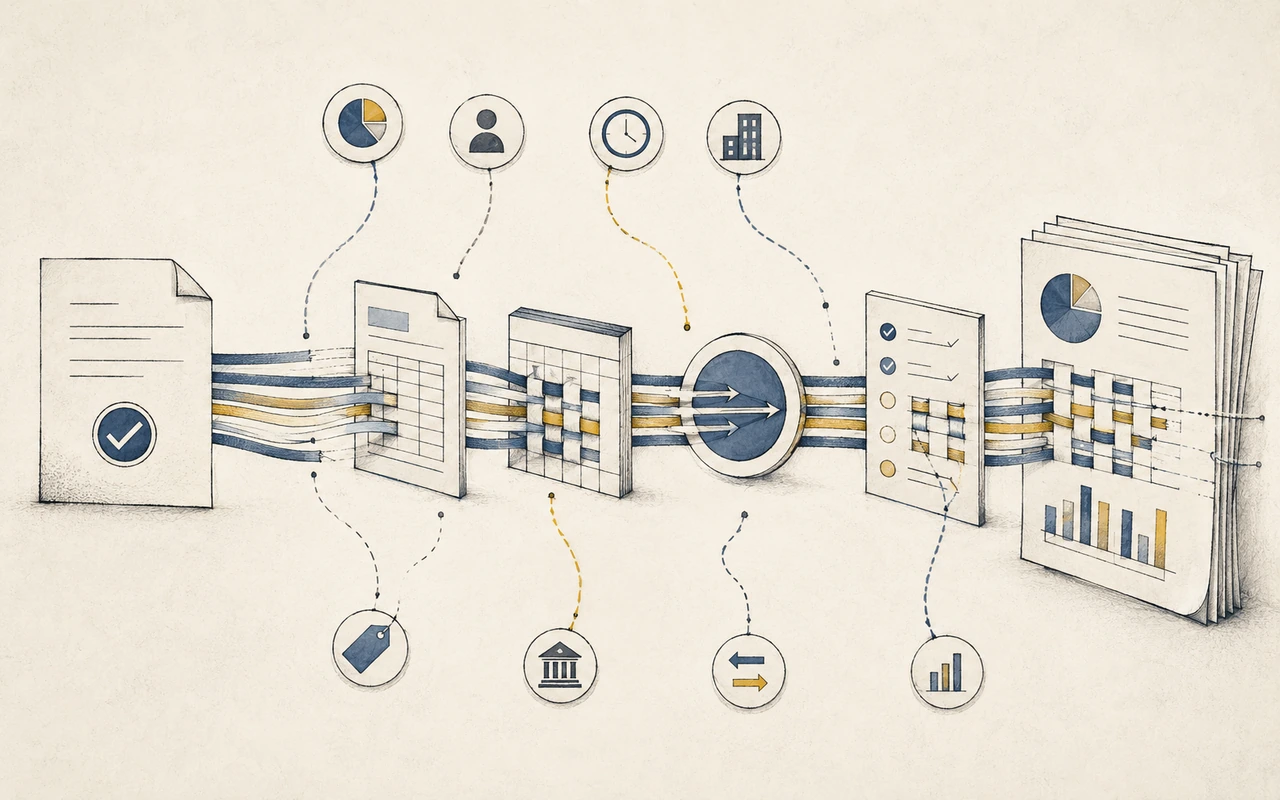
Executive summary
- Approval is not finance control if it confirms permission but misses budget, timing, vendor, and reporting context.
- Reporting problems often begin before the invoice arrives, when the operational request is approved incompletely.
- Finance-ready approvals reduce later cleanup across accruals, variance analysis, vendor reporting, and budget ownership.
- A connected finance layer becomes necessary when approval context needs to carry into accounting, payments, reconciliation, and reporting.
“It was approved.”
That is the technically correct answer a department head gives when finance questions an invoice. The approval exists. The vendor was cleared. The spend was not hidden. But finance still does not know which cost center owns it, whether it belongs to this month or next month, whether it was inside budget, or why it appears under a category the budget owner later disputes.
That is where an approval workflow for finance teams starts to matter. Approval is not only about permission. It is the first point where finance context should be captured before the transaction becomes an accounting, reporting, and budget-control problem.
Why approval is not the same as finance control
Most approval workflows are built around authorization. Who requested the spend? Who approved it? Was the amount within the person’s limit? Did procurement or operations sign off?
Those questions matter, but they do not give finance enough information to report cleanly later. A department can approve software spend without specifying whether it is a renewal, new headcount-related tooling, implementation cost, or usage-based overage. The invoice can be legitimate while still creating confusion in the month-end report.
Finance control requires more than a yes or no. It needs the approval to carry the meaning of the spend: budget owner, cost center, entity, vendor, period, category, project, and expected cash timing. Without that, finance is forced to interpret the transaction after the fact, usually when the reporting deadline is already close.
Where approval workflows create reporting cleanup
The cleanup usually starts quietly. An invoice arrives with an approved email attached, but the invoice description does not match the budget line. The vendor name differs from the contract name. The approval mentions “marketing campaign,” but the invoice includes media spend, agency fees, and production costs in one amount.
At low volume, finance can ask around. The finance manager messages the requester, checks the purchase thread, and updates the classification manually. That works when there are a few departments and recurring vendors are familiar.
The workflow starts failing when more departments, vendors, and budget owners enter the process. Finance receives technically approved transactions but still has to reconstruct why the spend happened. Reporting classification becomes an after-the-fact judgment call, not a controlled input.
This is one reason teams fall into what the historical lag trap describes: by the time finance has enough information to explain what happened, the decision window has already moved on. Approval happened early, but the useful finance context arrived late.
What finance needs before spend becomes a transaction
A finance-ready approval should answer the questions finance will need later, not only the questions required to release the spend. The approval should clarify who owns the budget, what the spend relates to, when the cost should be recognized, when cash is expected to move, and how the vendor should be classified.
For example, assume a sales team approves a $24,000 annual CRM add-on in May. The invoice is approved because the VP Sales signed off and the amount is within authority. But finance later needs to know whether the cost should be spread over 12 months, assigned fully to sales, split with customer success, treated as expansion software, or flagged as an unplanned variance against the original budget.
If those details are not captured at approval, finance will fix them later during close. The report may show a May overspend that the sales leader disputes because they expected the cost to be amortized. The accounting entry may be correct, but the management report becomes a debate.
The same pattern appears in vendor reporting. If one vendor supports multiple departments, finance needs the approval to identify the commercial reason for the spend. Otherwise vendor analysis shows total spend, but not the operating behavior behind it.
Finance-ready approval checklist
Before an operational request is approved, finance should be able to capture:
- Budget owner and approving manager.
- Legal entity or branch responsible for the cost.
- Cost center, department, project, or customer allocation.
- Vendor name matched to the finance vendor master.
- Spend category used for management reporting, not only accounting.
- Contract period or service period.
- Expected invoice date and payment timing.
- Whether the spend is budgeted, unbudgeted, or a forecast change.
- Whether the cost is recurring, one-off, usage-based, or prepaid.
- Any required explanation for future variance reporting.
This checklist is not meant to slow every request. It separates routine approvals from approvals that will create reporting questions later. A small office supply purchase may need limited detail. A new recurring software contract, cross-entity supplier, campaign commitment, or outsourced service agreement needs more context because it will affect future reporting, forecasting, and variance explanations.
The goal is to capture the data at the point where the requester still understands the decision. Once the invoice reaches accounting weeks later, finance is often working with partial memory and disconnected evidence.
How better workflows improve reporting later
A stronger approval workflow reduces the number of reporting adjustments finance has to make after transactions enter the ledger. It does not remove judgment, but it moves the judgment earlier. That makes accruals cleaner, budget checks more credible, and variance explanations easier to defend.
It also improves granularity. Finance often knows the total spend number but lacks the detail needed to explain movement by department, product, project, or entity. That is the problem behind the granularity gap: reports can be accurate at the top level while still being too blunt for management decisions.
Better approvals help because they attach reporting detail before the transaction is posted. A campaign cost is not only “marketing expense.” It can be tied to a campaign owner, expected launch period, vendor type, budget line, and cash timing. When the month-end report shows a variance, finance can explain whether the movement came from planned campaign timing, supplier overrun, or a new approval.
This is also where approval workflows connect to broader finance operations. Payment, reconciliation, and reporting problems often begin in the earlier request stage. The same handoff issue discussed in finance operations software and payment workflows applies here: each step may be valid, but the context weakens as the transaction moves between teams and systems.
This is where a post-accounting layer such as Kudwa fits. Not by replacing the approval workflow, accounting system, bank portal, or ERP, but by connecting the finance context those systems produce. Kudwa helps finance see whether approved spend, posted transactions, payment movement, and reporting classifications are aligned in one controlled view, so the approval does not lose meaning before it reaches the report.
Practical takeaway
Approval workflows become finance problems when they approve spend without preserving meaning. The approval proves permission, but finance still has to rebuild the reporting story later. That is where budget disputes, late accrual fixes, vendor classification issues, and weak variance explanations begin.
Finance teams should review approval workflows from the report backward. Start with the questions the CFO, COO, or board will ask at month-end: why did this category move, who approved the spend, was it budgeted, when will cash leave, and which entity owns it? Then check whether the approval process captures those answers before the invoice reaches accounting.
If approved spend still turns into reporting cleanup later, the workflow is not carrying enough finance context. See how Kudwa connects finance data across your existing systems so reporting starts from cleaner operational inputs.
Latest from Kudwa

How to Cut Costs Without Hurting Growth
Cutting the spend you can see is easy. Here is how to cut costs without hurting growth: find which dollars produce revenue before you remove them.

AI in FP&A: Which Parts of the Cycle It Can Actually Run
AI in FP&A can name the driver behind a margin miss before your team opens the file. What it runs today, and where approval still sits.